Sunscreen: Everything You Need to Know
When it comes to protecting your skin, sunscreen is one of the most important products you can use every day. Yet there is still a lot of confusion around SPF ratings, sunscreen types, how much to apply, and whether you really need it on cloudy days.
At Sun Zapper, we believe sunscreen education is just as important as sunscreen itself. Here's everything you need to know to help keep your skin protected year-round.
Why Does Sunscreen Matter?
The sun emits ultraviolet (UV) radiation that can damage your skin in both the short and long term.
UVA Rays
UVA rays penetrate deep into the skin and are associated with:
Premature ageing
Wrinkles and fine lines
Hyperpigmentation and sunspots
DNA damage
Increased skin cancer risk
UVB Rays
UVB rays are responsible for:
Sunburn
Skin damage
Collagen breakdown
Increased skin cancer risk
While UVB rays are strongest during summer, UVA rays are present year-round and can even penetrate glass and cloud cover.
Studies suggest that UV exposure contributes to up to 80% of visible skin ageing and is linked to the majority of non-melanoma skin cancers.
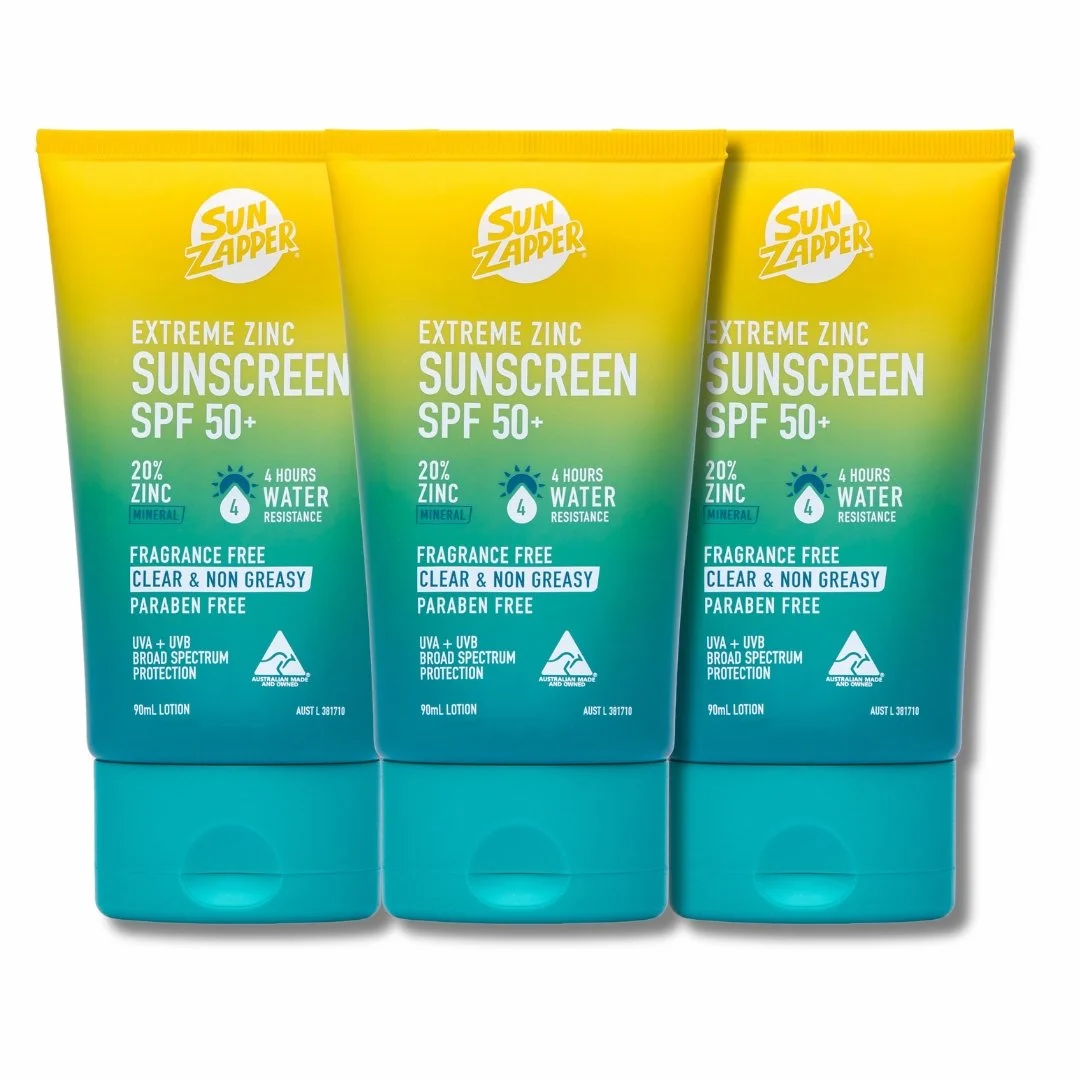
20% Zinc Oxide
SPF 50+
Fragrance Free
Paraben Free
Vegan
Contains Vitamin B3+B5, Vitamin E & Aloe Vera
4 Hours Water Resistance
Rubs in Clear
Protects against UVA and UVB rays
Extreme element barrier
Suitable for all Skin Types
Safe for children over 6 months old
MADE IN AUSTRALIA
90mL
Understanding SPF
SPF stands for Sun Protection Factor and measures how effectively a sunscreen protects against UVB rays.
SPF Comparison
SPF 15
Blocks approximately 93% of UVB rays
SPF 30
Blocks approximately 97% of UVB rays
SPF 50+
Blocks approximately 98% of UVB rays
No sunscreen blocks 100% of UV radiation. Even SPF 100 only offers a small increase in protection compared to SPF 50+.
It's important to remember that SPF primarily measures UVB protection. Always choose a broad-spectrum sunscreen to help protect against both UVA and UVB rays.
For Australia's harsh conditions, SPF 50+ broad-spectrum protection is generally recommended for outdoor activities and extended sun exposure.
Mineral vs Chemical Sunscreen
Not all sunscreens work in the same way.
Chemical Sunscreens
Chemical sunscreens absorb UV radiation and convert it into heat before it can damage the skin.
Benefits:
Lightweight feel
Often invisible on the skin
Easy daily wear
Considerations:
May require application 20–30 minutes before sun exposure
Some formulations may irritate sensitive skin
Mineral Sunscreens
Mineral sunscreens use ingredients such as Zinc Oxide and Titanium Dioxide.
Benefits:
Immediate protection once applied
Suitable for sensitive skin
Broad-spectrum protection
Often preferred by people with reactive or acne-prone skin
Considerations:
Some formulas may leave a visible white cast
Sun Zapper's Pure Zinc range uses Zinc Oxide to provide broad-spectrum protection while remaining comfortable for everyday use.
How to Apply Sunscreen Correctly
Even the best sunscreen won't provide adequate protection if it isn't applied correctly.
Use Enough
For your face and neck, use approximately two finger lengths of sunscreen. Most people only apply 25–50% of the amount needed to achieve the SPF rating shown on the label.
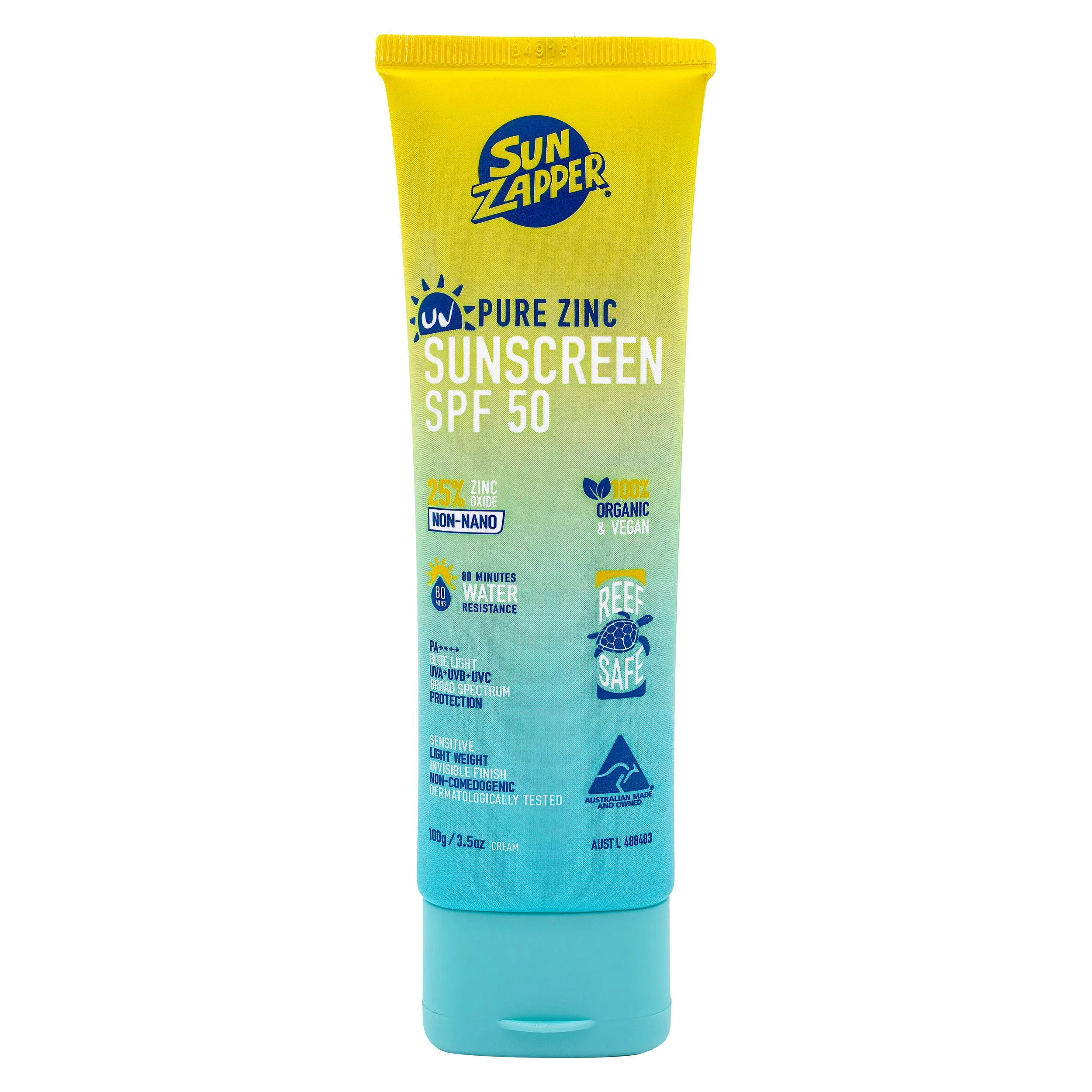
Sun Zapper Pure Zinc Sunscreen Cream SPF 50 is a broad-spectrum UVA/UVB mineral sunscreen made with 25% zinc oxide. It’s reef safe (no chemical sun filters), fragrance free, paraben free, and offers 80 minutes water resistance. Designed to rub in clear and act as an “extreme element barrier”, it suits all skin types and is safe for children over 6 months. Made in Australia.
25% Zinc Oxide
Reef Safe - no chemical sun filters
SPF 50
Kakadu Plum - high in Vitamin C, promotes collagen & skin elasticity
Jojoba - high in Vitamin E, softens & moisturises skin
Sea Buckthorn, Marigold, Chamomile - anti-ageing & ant-inflammatory
Fragrance Free
Paraben Free
80 Minutes Water Resistance
Rubs in Clear
Protects against UVA and UVB rays
Extreme element barrier
Suitable for all Skin Types
Safe for children over 6 months old
MADE IN AUSTRALIA
100g
Apply Before Exposure
Apply sunscreen before heading outdoors. While mineral sunscreens provide immediate protection, applying before exposure helps ensure even coverage.
Reapply Regularly
Reapply every two hours when outdoors, and after swimming, sweating, or towel drying.
Water-resistant does not mean waterproof.
Don't Forget These Areas
Commonly missed areas include:
Ears
Lips
Eyelids
Hands
Back of the neck
Scalp
These areas are often among the first to show signs of sun damage.
Choosing Sunscreen for Your Skin Type
Sensitive Skin
Look for:
Mineral sunscreen formulas
Fragrance-free products
Zinc Oxide-based protection
Combination Skin
Look for:
Lightweight, non-greasy formulas
Daily SPF 30–50 protection
Tinted options for a natural finish
Oily or Acne-Prone Skin
Look for:
Lightweight lotions or fluids
Non-comedogenic formulas
Oil-free options
Dry Skin
Look for:
Moisturising sunscreen formulas
Cream or lotion textures
Hydrating ingredients
It's also important to remember that darker skin tones still require sunscreen. While melanin provides some natural protection, it does not eliminate the risk of UV damage, pigmentation, or skin cancer.
Common Sunscreen Myths
"I Don't Need Sunscreen on Cloudy Days"
False.
Up to 80% of UV rays can pass through clouds.
"My Makeup Contains SPF, So I'm Covered"
False.
Most people don't apply enough makeup to achieve the advertised SPF protection. Sunscreen should always be applied underneath.
"I Only Need Sunscreen in Summer"
False.
UV radiation is present all year round. Winter sun, reflective surfaces, and outdoor activities can still cause significant UV exposure.
"Higher SPF Means I Can Stay Out Longer"
False.
Regardless of SPF rating, sunscreen should be reapplied every two hours when outdoors.
"Sunscreen Causes Vitamin D Deficiency"
False.
Most people receive adequate Vitamin D through incidental daily sun exposure while still wearing sunscreen.
Key Takeaways
Wear broad-spectrum SPF 30–50+ every day.
Apply enough sunscreen to achieve the labelled protection.
Reapply every two hours when outdoors.
Choose a sunscreen that suits your skin type.
Don't forget commonly missed areas like ears, lips, hands, and scalp.
The best sunscreen is the one you'll actually wear every day.
At Sun Zapper, we're committed to helping Australians enjoy the outdoors while protecting their skin. Whether you're heading to the beach, hitting the trails, training outdoors, or simply going about your daily routine, consistent sunscreen use remains one of the best investments you can make for your long-term skin health.
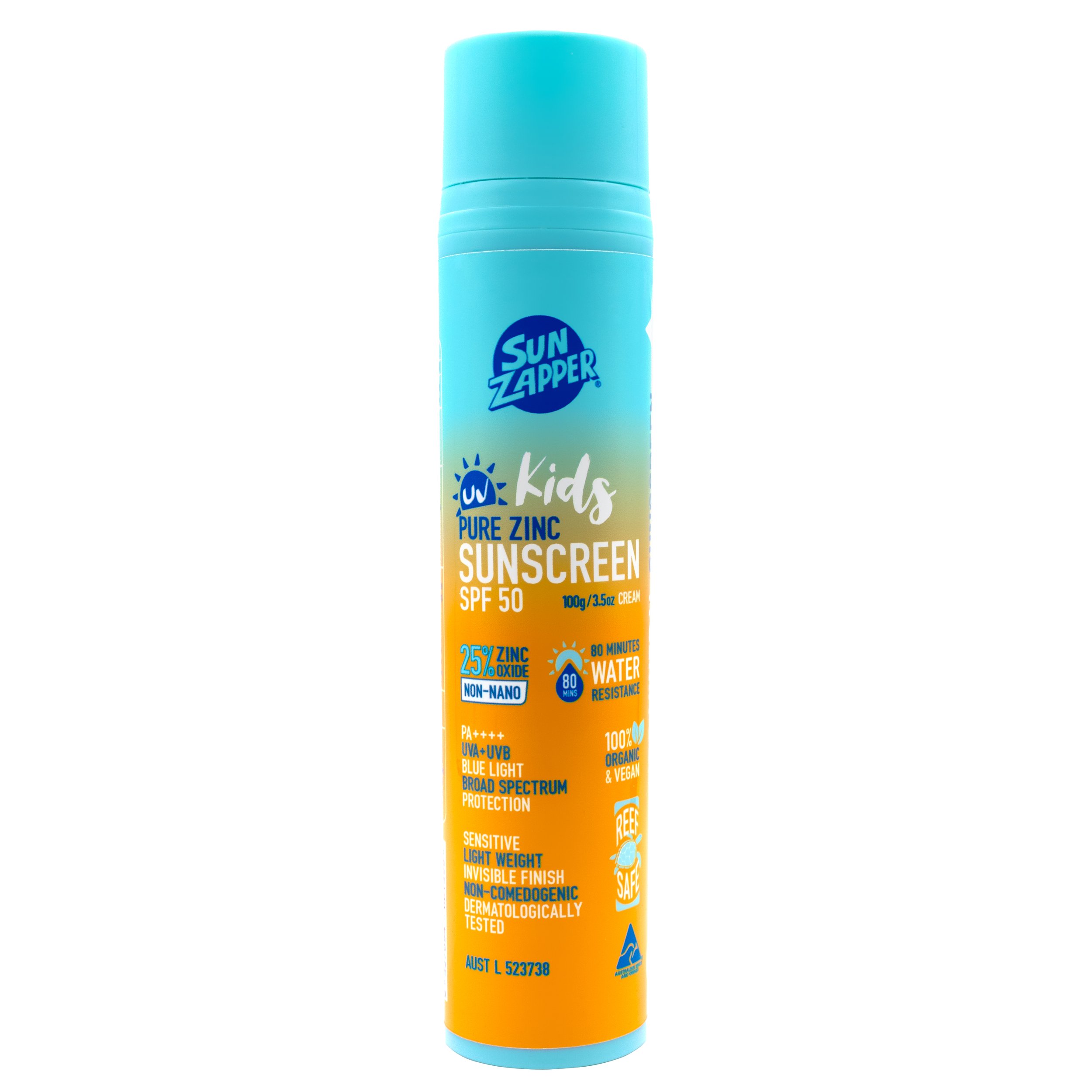
Sun Zapper Kids Pure Zinc Sunscreen Cream SPF 50 delivers broad-spectrum UVA/UVB protection with 25% non-nano zinc oxide. It’s 100% vegan & organic, reef safe (no chemical sun filters), preservative free, paraben free, and artificial fragrance free. Built for active outdoor days, it offers 80 minutes water resistance, rubs in clear, and works as an “extreme element barrier”. Suitable for all skin types and safe for children over 6 months. Made in Australia.
25% Non-Nano Zinc Oxide
100% Vegan & Organic
Reef Safe - no chemical sun filters
SPF 50
Artificial Fragrance Free
Paraben Free
Preservative Free
80 Minutes Water Resistance
Rubs in Clear
Protects against UVA and UVB rays
Extreme element barrier
Suitable for all Skin Types
Safe for children over 6 months old
MADE IN AUSTRALIA
100g
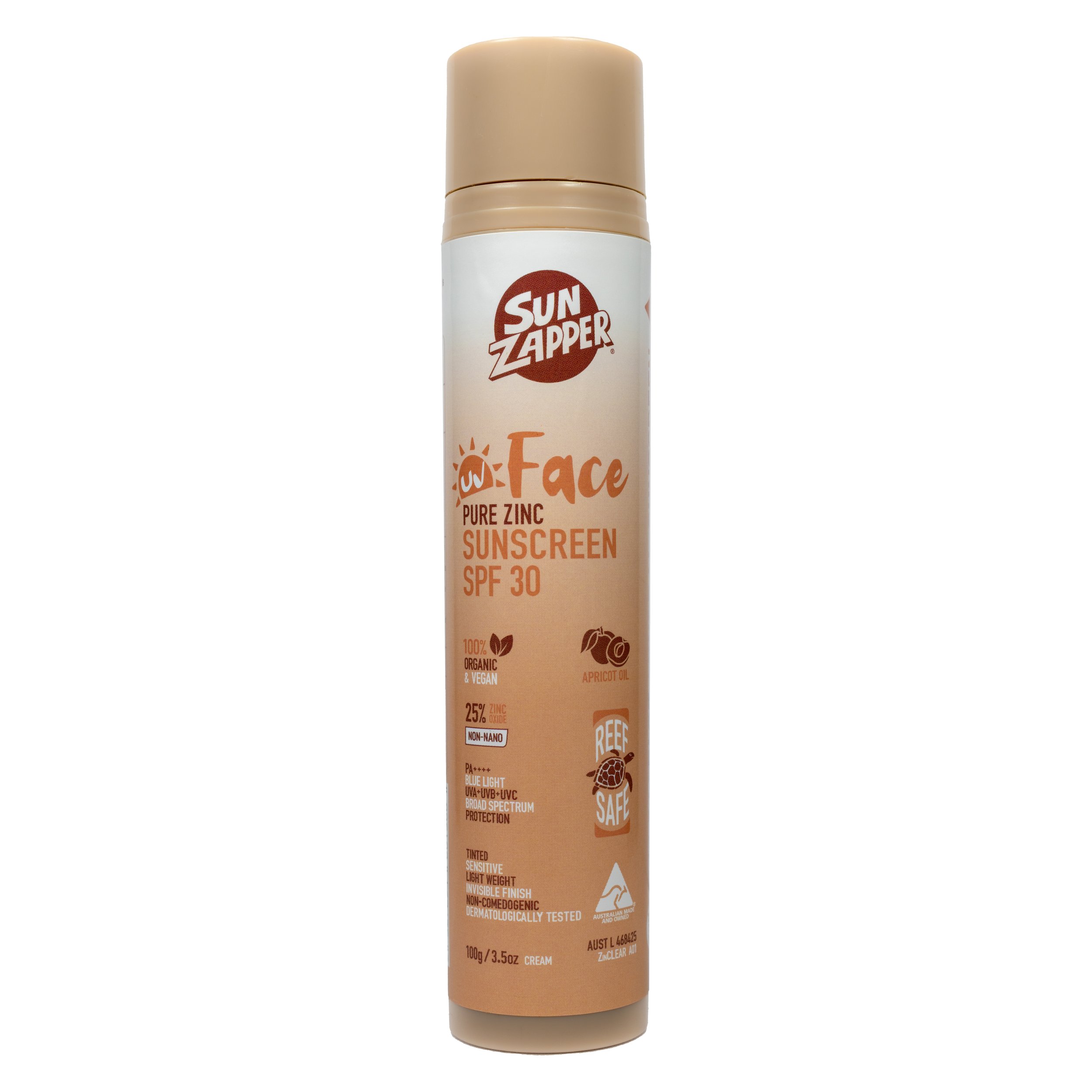
Sun Zapper Face Pure Zinc Sunscreen Cream SPF 30 uses 25% non-nano zinc oxide for broad-spectrum UVA/UVB protection without chemical sun filters. It’s reef safe, 100% vegan & organic, preservative free, paraben free, artificial fragrance free, and rubs in clear. Contains organic apricot oil and is designed as an “extreme element barrier” suitable for all skin types. Made in Australia.
25% Non-Nano Zinc Oxide
100% Vegan & Organic
Contains Organic Apricot Oil
Reef Safe - no chemical sun filters
SPF 30
Tinted
Artificial Fragrance Free
Paraben Free
Preservative Free
Rubs in Clear
Protects against UVA and UVB rays
Extreme element barrier
Suitable for all Skin Types
Safe for babies over 6 months old
MADE IN AUSTRALIA
100g